🇮🇱 Agentic Inception: Using Agentic Workflows to Build an Agentic Workflow Talk
Faced with a massive 200-slide lecture deadline, I decided to "burn the ships" and build an agentic system to research, index, and architect the talk itself. This session moves beyond theory to show how I used n8n and AI agents to transform raw data into a professional presentation. You’ll walk away with a proven framework for building agentic workflows that solve real-world "impossible" tasks.
🇮🇱 The Graph vs. The Janitor: Organizing Code for the AI Era
AI empowers non-devs to ship code, but you're the one stuck cleaning it up. As a "rehabilitating developer," you face a grim choice: spend hours reviewing and fixing AI-generated PRs just to make them mergeable or let the work go to waste. Stop being a code janitor! I challenge you to fundamentally rethink the code-product connection.
We will explore mapping the codebase as a relational graph of business units rather than mere lines. This creates a shared language for devs, PMs, and AI agents to understand impact and prioritize reuse over technical debt. Let's move from syntax to intent.
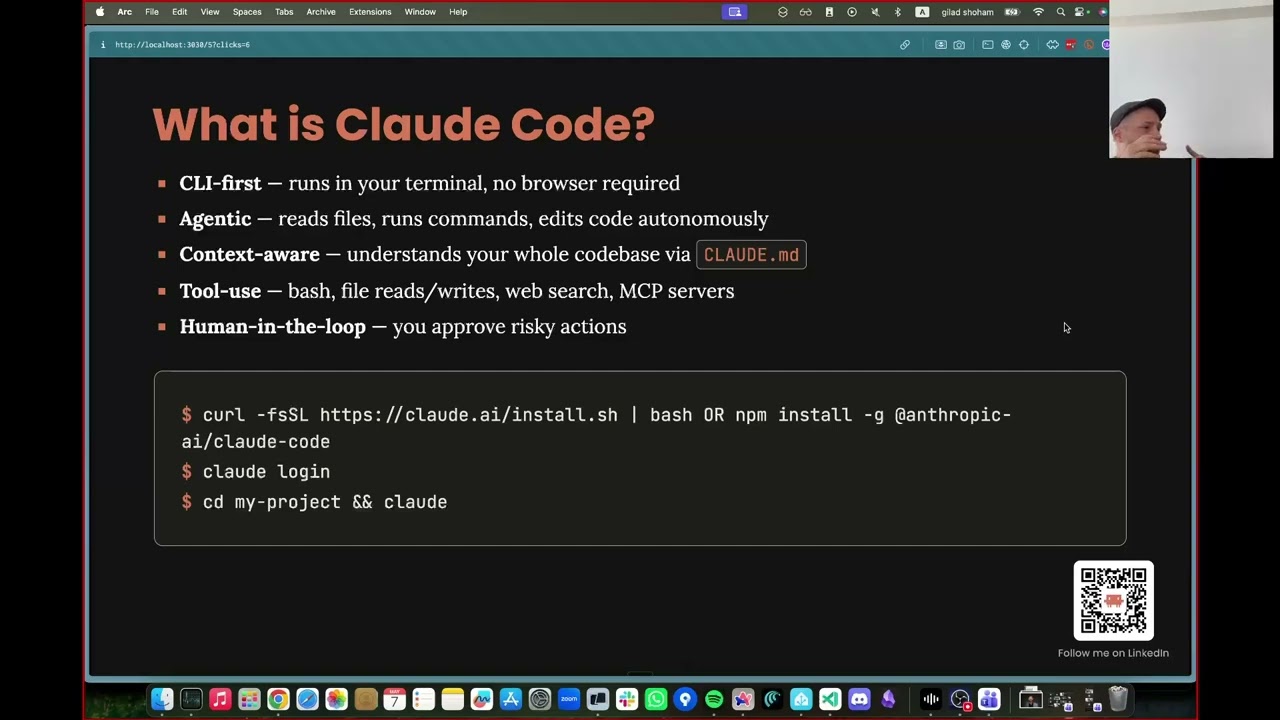
This workshop offers a deep, hands on journey into Claude Code and the modern AI developer workflow. We explore how Claude Code assists in everyday development tasks like code completion, test generation, documentation, refactoring, issue fixing, and shaping entire code blocks through natural conversation. Participants learn how to get real value from Claude Code, from asking meaningful questions to applying changes directly in their code, using slash commands, running commands, and leveraging context such as previous conversations, attached files, and system level hints. We dive into Claude Code's agentic workflows and understand how they differ from simple chat based interactions, while practicing powerful flows like reviewing changes, working with a focused working set, refining code inline, and enhancing productivity through smart actions, custom instructions, and memory tools.
Throughout the session we examine how Claude Code uses environment specific context like the workspace, terminal, and external tools via MCP (Model Context Protocol) to produce more tailored answers. We also explore new capabilities including extended thinking, multi agent workflows, prompt optimization, and task oriented workflows such as TODO management. A dedicated segment covers model comparison so participants can understand how different Claude models like Opus, Sonnet, and Haiku behave and how to choose the right one for each task.
The workshop also opens the door to enterprise level features such as custom configurations, security and privacy controls, and usage patterns that allow organizations to monitor and maximize impact. Finally, we walk through practical examples, architecture and component layouts, prompt patterns, and tips for producing consistently strong results, ending with live demos that bring all the concepts together into real development scenarios. This is an end to end exploration designed to level up your daily workflow and give you a clear sense of how to harness Claude Code as a powerful engineering partner.
May 7, 2026 • Lightico
AIDeveloper ToolsProductivity
Private
🇮🇱 From Blank Page to "Accepted": Reverse Engineering a Talk Proposal
Getting a "Yes" from a committee isn't luck, it's engineering. Most developers fail at the CFP stage because they focus on the talk, not the pitch. Drawing from my experience on dozens of global stages, I'll reverse-engineer my workflow: from ideation and research to knowing exactly where to use (and avoid) AI. You'll leave with a proven framework to turn a blank page into a winning proposal for the world's biggest stages.
סוכני קוד בכל פינה - כך נראה עתיד הפיתוח ב-2026 🇮🇱
בסרטון זה אנחנו צוללים למהפכת ה-AI Driven Code: איך סוכני קוד וכלים כמו Lovable, Replit, Cursor ו-Claude Code משנים את הדרך שבה מפתחים ואנשים ללא רקע טכני, כותבים קוד עם AI. יחד עם גלעד שוהם מ-Bit Cloud נבין בפשטות איך AI מג'נרט קוד, מהם הסיכונים האמיתיים כמו דליפות מידע ומחיקת דאטה, והאם אנחנו בדרך לעולם שבו כמעט כל הקוד נכתב על ידי מכונות. דיון חד על עתיד המתכנתים, וייב קודינג ודמוקרטיזציה של הפיתוח.
🇮🇱 From Chaos to Component: Bridging the AI Design System Gap
Most teams suffer from a "Design System gap" - either they don't have one, or their AI can't leverage it. In this talk, we’ll bridge that divide. You’ll learn how to use AI to extract a fresh design system from legacy apps and solve the "delivery gap" by keeping Figma and code perfectly in sync. You’ll leave with a blueprint to make your components machine-readable and your workflow automated.
🇮🇱 AI Agents in Production: Lessons from the Frontlines (Panel)
Moderator: Evyatar Edri, Co-Founder & CPO @ Let's AI
Hilla Bakshi, Founder @ Hameetupistiot Community
Smadar Tadmor, CEO & Co-Founder @ Claro-Mentor
Gilad Shoham, Dev & Open Source Leader @ Bit Cloud
AI agents are moving beyond hype and into production. In this panel, SaaS leaders share where AI agents are already delivering value – from customer support and onboarding to QA, security, and operations – and how to build trust with enterprise buyers.
Learn how to avoid hallucinations, design human-in-the-loop safeguards, and monetize AI features that customers actually adopt.
Topics we'll cover:
Real-world AI agent use cases in SaaS today.
How enterprises evaluate and trust AI-driven workflows.
Best practices for reducing hallucinations and adding guardrails.
Business models for packaging and monetizing AI features.
What's next: where AI agents will expand in SaaS over the next 12 months.
This presentation serves as a deep dive into the architecture and strategy behind Agentic AI. It covers the entire lifecycle of agent development: from understanding the "intelligence layer" and core primitives to mastering complex multi-agent orchestration patterns. Attendees will gain technical insight into integrating the Model Context Protocol (MCP) and RAG for enterprise data access, while learning how to ensure system reliability through robust design principles and data-driven evaluation metrics.
October 27, 2025 • Imperva
AI
Private
🇺🇸 Copilot Workshop - Checkpoint
This workshop offers a deep, hands on journey into GitHub Copilot and the modern AI developer workflow. We explore how Copilot assists in everyday development tasks like code completion, test generation, documentation, refactoring, issue fixing, and shaping entire code blocks through natural conversation. Participants learn how to get real value from Copilot Chat, from asking meaningful questions to applying changes directly in their code, using slash commands, running commands, and leveraging context such as previous conversations, attached files, and system level hints. We dive into Copilot Edits and understand how it differs from Chat View, Inline Chat, and Quick Chat, while practicing powerful flows like reviewing changes, working with a focused working set, refining code inline, and enhancing productivity through smart actions, custom instructions, and voice interactions.
Throughout the session we examine how Copilot uses environment specific context like GitHub, VS Code, the workspace, and the terminal to produce more tailored answers. We also explore new capabilities including the GitHub Copilot coding agent, the Plan Agent, handoffs, the CLI, Spaces, memory tools, prompt optimization, and task oriented workflows such as TODO management. A dedicated segment covers model comparison so participants can understand how different large models like OpenAI, Gemini, Claude, and others behave and how to choose the right one for each task.
The workshop also opens the door to enterprise level features such as knowledge bases, custom models, security and privacy controls, policies, and the Metrics API that allows organizations to monitor usage and impact. Finally, we walk through practical examples, architecture and component layouts, prompt patterns, and tips for producing consistently strong results, ending with live demos that bring all the concepts together into real development scenarios. This is an end to end exploration designed to level up your daily workflow and give you a clear sense of how to harness Copilot as a powerful engineering partner.
September 29, 2025 • Checkpoint Internal Workshop
AI
Private
🇮🇱 Beyond the Hype: Turning AI Code Generation into Enterprise-Ready Software
AI code generators may shine in benchmarks but underdeliver in enterprise environments. They create outputs that compromise stability, increase maintenance costs, and reduce consistency. This talk introduces a new approach: enterprise-grade code generation that reuses existing assets, enforces standards, assesses impact, and delivers production-ready components.
🇮🇱 Beyond the Hype:
Turning AI Code Generation into Enterprise-Ready Software
AI code generators may shine in benchmarks but underdeliver in enterprise environments. They create outputs that compromise stability, increase maintenance costs, and reduce consistency. This talk introduces a new approach: enterprise-grade code generation that reuses existing assets, enforces standards, assesses impact, and delivers production-ready components.
🇮🇱 From Generation to Composition: A New Era in AI Coding (1hr + demo)
Most GenAI tools write code like interns with amnesia - fast, shallow, and unaware of the bigger picture. Not because they lack power, but because we're not giving them the right foundation.
This talk shows how to level up your AI from code monkey to system architect by giving it what it actually needs: structure. You'll learn how composable components turn a codebase into a live map of your organization's product and business functionality that AI can understand, reuse, and build with.
We'll explore four key principles that help AI see and use code like a great human architect, focusing on functionality, context, reuse, and system-level thinking. You'll also see a live demo of HopeAI composing real product features, by putting architecture first and syntax second.
🇮🇱 Platform as a Product: Building Platforms with APIs that Developers Love
A successful platform isn't just infrastructure, it's a product. To drive real adoption, platforms must offer seamless, developer-friendly APIs that integrate directly into code, eliminating the need for external docs or DevOps dependencies. Developers should be able to debug, extend, and contribute as they would with any other product. In this talk, I'll showcase real-world platform APIs and share lessons from working with dozens of platform teams, demonstrating proven strategies to build platforms that developers love to use and scale.
Empower your developers for creation without bottlenecks. Free DevOps for more meaningful activities. Boost organization velocity.Join us for an exciting panel where we'll discuss how this magic can happen.
🇮🇱 From Generation to Composition: A New Era in AI Coding (30m + Demo)
AI code generators excel in benchmarks but often fall short in the real world. Why haven’t they revolutionized development? Because they generate code snippets that lack context, duplicate functionality, require manual integration, and can introduce errors. This talk presents a new approach to code generation that reuses existing code, follows company standards, tests for impact, and generates fully executable components ready for integration.
🇮🇱 From Generation to Composition: A New Era in AI Coding
AI code generators excel in benchmarks but often fall short in the real world. Why haven’t they revolutionized development? Because they generate code snippets that lack context, duplicate functionality, require manual integration, and can introduce errors.
This talk presents a new approach to code generation that reuses existing code, follows company standards, tests for impact, and generates fully executable components ready for integration.
🇮🇱 Beyond Snippets: Optimizing Code Generation by Reusing Existing Components
AI code generators excel in benchmarks but often fall short in the real world. Why haven’t they revolutionized development? Because they generate code snippets that lack context, duplicate functionality, require manual integration, and can introduce errors.
This talk presents a new approach to code generation that reuses existing code, follows company standards, tests for impact, and generates fully executable components ready for integration.
🇮🇱 From Generation to Composition: A New Era in AI Coding
AI code generators excel in benchmarks but often fall short in the real world. Why haven’t they revolutionized development? Because they generate code snippets that lack context, duplicate functionality, require manual integration, and can introduce errors.
This talk presents a new approach to code generation that reuses existing code, follows company standards, tests for impact, and generates fully executable components ready for integration.
Join Gilad, from Bit, as he shares practical insights from helping organizations of various sizes transition from monolithic frontends to micro frontends. Drawing from real-world examples, this talk will explore what worked, what didn’t, and how his team approached breaking down large frontends into modular, scalable components. Attendees will gain a deeper understanding of different approaches like runtime vs. build time composition, the pros and cons of each, and key questions to consider when choosing the right architecture for their needs.
November 28, 2024 • Tikal - Frontend Architecture in Action
🇮🇱 The Ripple Effect: Propagating Updates Across a Graph of Dependencies
Component-driven development creates complex dependency graphs, where updating one component can affect many others. This talk addresses the challenges of propagating updates at scale, and offers solutions for automating updates, optimizing propagation, collaborating over changes, and enforcing policies across your codebase.
🇺🇸 Code on Demand: The Future of Code Collaboration
The video talk explores the impact of streaming on code collaboration, emphasizing code on demand. It highlights how streaming has transformed music consumption and draws parallels to software development. Developers can now craft reusable components, similar to building with Lego, using tools like Bit. The talk contrasts the traditional development workflow with a more efficient, modular approach. Claudia and McDonald, engineers at Spotify, share their experiences in building a new player menu, showcasing the benefits of a component-based workflow. The talk also discusses the importance of contextual search, live examples, and comprehensive documentation in modern development. The speaker encourages treating components as complete products and enhancing discovery tools to motivate developers. Practical steps for improving component reuse include prioritizing component reviews, versioning, and simplifying the sharing process. The talk underscores the social aspects of streaming, such as tracking code impact and fostering collaboration across teams.
🇮🇱 Micro Frontend Build time vs Runtime dependencies - a gentle equilibrium
Micro frontends break down monolithic front-end code into self-contained units, much like microservices for the backend. This talk explores two ways to merge micro frontends: runtime composition and build-time bundling. I will discuss the trade-offs, including team independence, performance, and update management. I will also share how to combine these approaches, offering tools and processes to balance both strategies.
🇮🇱 The Golem Turns On His Creator - How I took home automation too far (long version)
How smart should you make your house?
Ever wished you can automate everything in your home? Really everything?
For 5 years I’ve been radically automating my house: It finds my phone and reports its location when I ask, it starts boiling water when my baby starts to cry, and it calls my phone when my spouse calls me downstairs.
I won’t lie, it’s pretty awesome.
But a smart home is a powerful servant and a dangerous master.
My home has become a weapon for my kids against me. It tried to sabotage my marriage. It even made me live in the dark. But I survived.
In this talk, I will share my experience and raw footage of an experiment gone too far. Together we’ll try to create a useful toolbox of does and don’ts for the brave smart home engineer.
🇮🇱 The Golem Turns On His Creator - How I took home automation too far (with demo)
How smart should you make your house?
Ever wished you can automate everything in your home? Really everything?
For 5 years I’ve been radically automating my house: It finds my phone and reports its location when I ask, it starts boiling water when my baby starts to cry, and it calls my phone when my spouse calls me downstairs.
I won’t lie, it’s pretty awesome.
But a smart home is a powerful servant and a dangerous master.
My home has become a weapon for my kids against me. It tried to sabotage my marriage. It even made me live in the dark. But I survived.
In this talk, I will share my experience and raw footage of an experiment gone too far. Together we’ll try to create a useful toolbox of does and don’ts for the brave smart home engineer.
🇮🇱 The Golem Turns On His Creator - How I took home automation too far
How smart should you make your house?
Ever wished you can automate everything in your home? Really everything?
For 5 years I’ve been radically automating my house: It finds my phone and reports its location when I ask, it starts boiling water when my baby starts to cry, and it calls my phone when my spouse calls me downstairs.
I won’t lie, it’s pretty awesome.
But a smart home is a powerful servant and a dangerous master.
My home has become a weapon for my kids against me. It tried to sabotage my marriage. It even made me live in the dark. But I survived.
In this talk, I will share my experience and raw footage of an experiment gone too far. Together we’ll try to create a useful toolbox of does and don’ts for the brave smart home engineer.
🇺🇸 Component-driven microservices with NodeJS and Bit
We all love components on the frontend, but have you tried them on the backend?
In this live coding session, Gilad, Bit's VP R&D, will show you how to compose component-driven microservices using NodeJS, Express and Bit.
Join him to learn how to:
- Compose 2 component-driven microservices from scratch.
- Easily add, modify, and remove components from your services.
- Share managed components between services to radically speed up backend development.
- Easily manage dependencies and updates between components and services.
- Gradually build a reusable toolbox of backend components.
- Modify and update components in the context of another service or project.
- Avoid configs and have a smooth dev experience.
More of today's applications are being built from smaller components and modules.
However, the workflow around building with smaller components can also generate a lot of overhead. Bit is an open source project which helps developers discover, use and collaborate on shared components while distributing the development process itself.
In this talk I will introduce Bit, talk about the challenges and opportunities of building a core piece of your technology with the community, the challenges of having to play hand in hand with the rapidly-changing open source ecosystem (from Git & NPM to Webpack and React) and share some insights for teams who want to open source some of their projects
🇮🇱 Code-sharing in The Wild: From Libraries to Monorepos and Beyond
Sharing components between apps speeds our development and provides a better experience for our users.
The key to effective, scalable code-sharing lies in the architecture and tools we choose. In this talk I'll review the growth, pros and cons of this ecosystem from shared libraries through monorepos to new tools, and show a live demo of Bit- an open source project we created and use to share components between apps.
React encourages us to compose our application's UI from smaller reusable components.
Every button, slider or card is a component while larger elements can be composed out of smaller components to create new applications.
But, what happens when we want to share and reuse these components?
In this talk, we'll dive into this question and learn how different architectures, from multi-repo to monorepo, affect our team's ability to share and reuse components. We'll explore how different tools in the ecosystem play a role in this use case, and learn how Bit can help us isolate and share large numbers of components, making them available to discover, use and develop anywhere in a distributed workflow. The session will include a live coding demo session and Q&A.
More of today's applications are being built from smaller components and modules.
However, the workflow around building with smaller components can also generate a lot of overhead. Bit is an open source project which helps developers discover, use and collaborate on shared components while distributing the development process itself.
In this talk I will introduce Bit, talk about the challenges and opportunities of building a core piece of your technology with the community, the challenges of having to play hand in hand with the rapidly-changing open source ecosystem (from Git & NPM to Webpack and React) and share some insights for teams who want to open source some of their projects
🇮🇱 How and why I built my resume using React components
In this talk, I’ll talk about why building an online resume site is a good idea, how it can increase your chances to get a job , and why React is a great tool for this purpose.
I’ll give a live demonstration of a tool that can help you build those components easily and view them beautifully rendered in seconds.
This talk will change everything you know about testing.
You’re used to thinking about tests as a passive tool which helps you learn about your application’s state.
In this talk, I’ll show you how to take testing to the next level where tests can actually change your code, and become an active player in your development process.
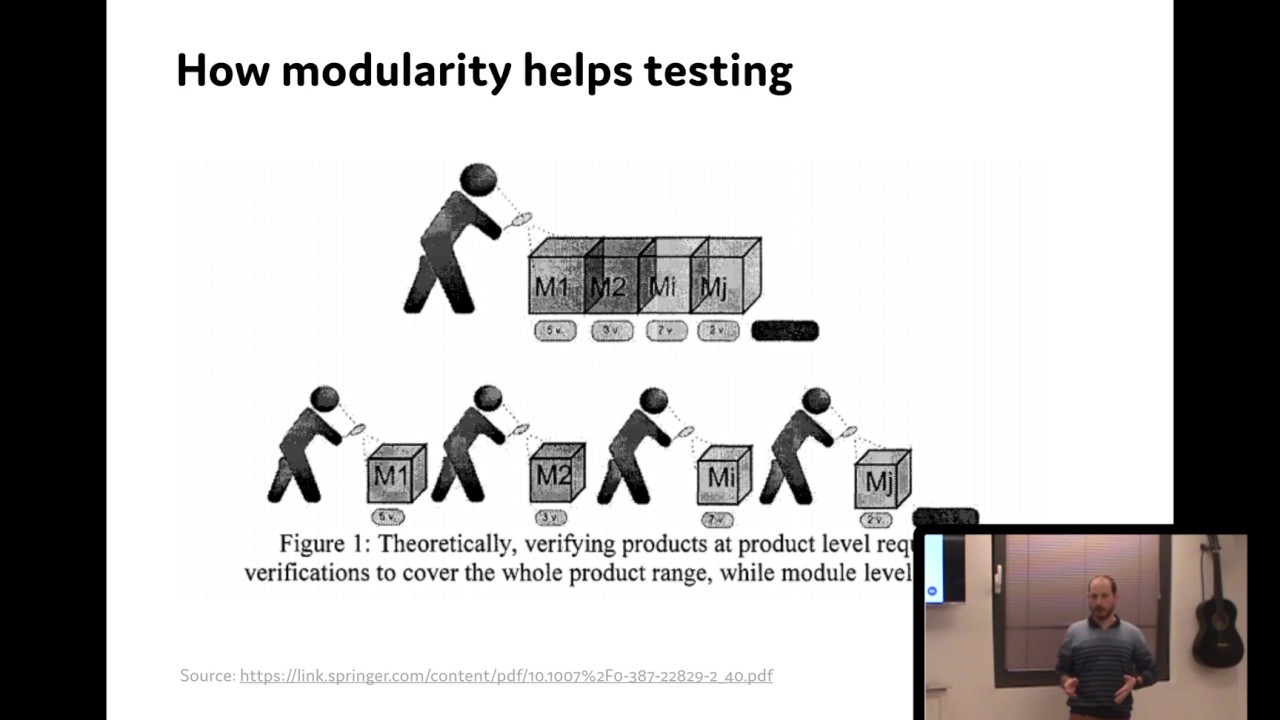
I will also talk about the relation between code modularity and writing tests, and show a live demo of how with the right tools you can adopt this approach today.
This talk is about making the GraphQL consumer happier, which will serve our goal as publishers, to increase adoption.
During this talk, Gilad describes a way for an organization to use components as a way to accelerate its GraphQL adoption. This GraphQL can be a public to everyone or public to the organization only.
Gilad describes the current problems with publishing and adopting APIs, and demonstrates a live demo of integrating GitHub GraphQL into his own project in few minutes by using components pre built by the publisher, without the need of reading any documentation (which as developers, we hate doing).